-

-
-
Product

Solutions
One app, all things legal

Compare
-
-
-

 Gmail
 Microsoft 365
 Wisetime
 Dropbox
 Zapier
 Quickbooks
 vs CosmoLex
 vs PracticePanther
 vs AbacusNext
 vs Caret Legal
 vs Clio
 vs MyCase
 vs Smokeball
 vs Filevine


Law Firm Referral Marketing: Build a Relationship and Follow-Up System
27th October 2026
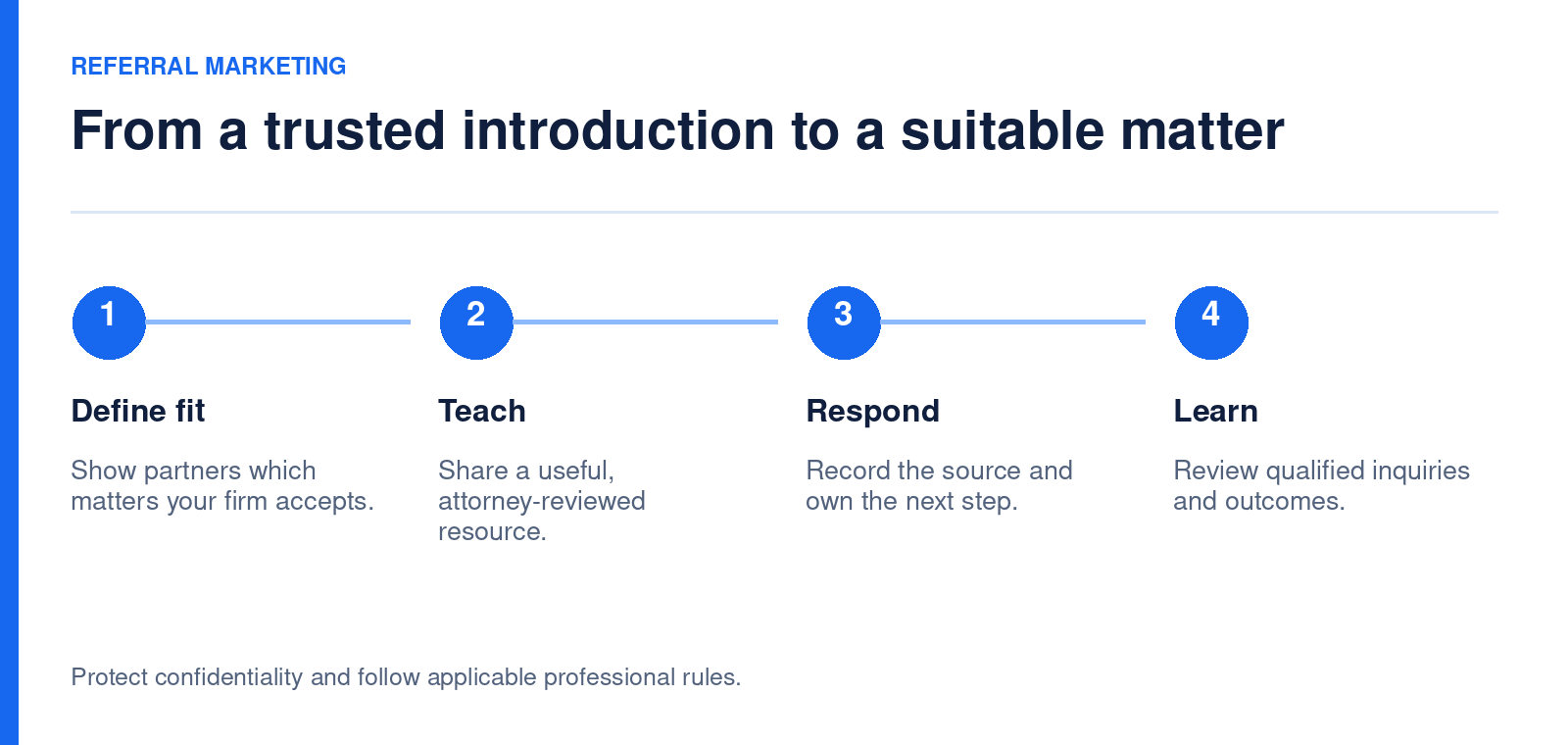
Law firm referral marketing works when the firm earns trust, makes an introduction easy, and follows up responsibly. A large contact list or a string of “send us business” emails is not a strategy. The stronger system helps past clients and professional contacts recognize the matters the firm handles, understand when an introduction is appropriate, and know what happens after a prospective client gets in touch.
This guide gives a U.S. firm a practical referral process: partner selection, educational touchpoints, intake attribution, follow-up, and measurement. It supports the Lawcus marketing automation product page with an operating plan, while preserving the distinct job of the firm’s legal CRM and practice-management process and intake processes. Review your jurisdiction’s rules before offering any referral arrangement or marketing incentive.
Define the right matter before asking for an introduction
Start with the cases your firm can serve well. Record practice area, geography, matter size, conflict constraints, language needs, capacity, and the situations that require urgent handling. A referral partner should not need to guess whether an inquiry belongs with your firm. Write a two-sentence description that a nonlawyer can repeat, followed by examples of matters you do and do not take.
For example, an estate-planning firm might say it helps local families plan wills, trusts, and powers of attorney, but does not handle contested probate litigation. A business firm could specify the size and type of transactions it accepts. Keep that description current when staffing or capacity changes. Sending an unsuitable lead through intake frustrates the prospect and weakens the relationship with the person who referred them.
Build a small, relevant referral map
List sources by relationship, not by vanity reach. Past clients who had a good experience may remember the firm when a friend faces a similar issue. Accountants, financial advisers, real estate professionals, therapists, and other lawyers may encounter related needs, depending on the practice. Community organizations can be valuable educational partners. Do not assume every category is appropriate for every matter or jurisdiction.
For each relationship, record the contact’s audience, the client problem that may overlap, a useful resource the firm can offer, and the next mutually welcome contact. Begin with ten to twenty genuinely relevant relationships. A small group you can support consistently is more useful than hundreds of cold names. Ask existing contacts what questions their clients repeatedly ask; that can reveal a practical webinar, checklist, or explainer worth creating.
Offer useful education before requesting referrals
A partner should be able to share something accurate without endorsing a case outcome. Create a short FAQ, a decision tree about when to speak to a lawyer, or a checklist for preparing an initial consultation. Avoid individualized legal advice in public material. Keep the resource clearly dated and owned by an attorney who can review it when rules or practice change.
Match the resource to the partner’s audience. An accountant may want a business succession primer, while a real estate professional may need a plain-language closing-issue guide. Share the resource through a brief personal note or a joint educational event when appropriate. The value is the answer to the audience’s question; the introduction is a possible consequence of being helpful, not a transaction to demand.
Make the handoff predictable
A referral fails when a prospect has to repeat a sensitive story several times or waits without knowing whether the firm received the inquiry. Choose one contact route for the partner to share, explain expected response times, and identify an alternative for urgent matters. The partner should not send confidential case details without the prospect’s permission. A firm can ask the prospect directly for the information needed to screen the matter.
Use an intake process that records the source, practice area, urgency, and next owner. Run conflicts and suitability checks before creating expectations about representation. A clear decline or referral onward can preserve trust when the firm is not the right fit. The law firm client intake checklist offers a fuller handoff from first inquiry to engagement.
Close the loop with the source only to the extent the prospect permits and confidentiality rules allow. A simple “Thank you for thinking of us; we connected with them” may be appropriate where authorized. Do not disclose the prospective client’s facts, engagement status, or advice merely because the person made an introduction.
Design a follow-up cadence people actually welcome
Use relationship notes to remember the partner’s interests and last interaction. A light cadence might include a useful article after a relevant question, a quarterly check-in, and a prompt response when the partner asks for help. Avoid a blanket monthly blast to everyone. An educational newsletter can be useful when contacts have opted in and each edition has a clear purpose.
Lawcus describes email scheduling and communication tools on its marketing automation page. Use those capabilities for reminders and consistent service, not to automate personal claims or send messages without permission. Review sender, audience, timing, and unsubscribe requirements for any campaign. A relationship owner should be able to pause a sequence when a contact’s circumstances change.
Keep the ethics boundary visible
Advertising, solicitation, fee sharing, and payment for recommendations are regulated differently across jurisdictions. ABA Model Rule 7.2 is a starting reference, not a substitute for the rules where your lawyers practice. Have counsel review proposed incentives, reciprocal arrangements, testimonials, and claims about results before launch. Document any disclosure or recordkeeping requirement that applies.
For former clients, protect confidentiality and avoid assuming they want public recognition. Ask permission before naming a client in a case study or requesting a testimonial. Do not imply that a general educational resource creates an attorney-client relationship. Referral marketing should make access to the firm easier while keeping professional judgment independent.
Track the path from introduction to retained matter
Measure stages rather than counting introductions alone. Record inquiries by source, qualified inquiries, consultations scheduled, consultations attended, matters accepted, and time to first response. A simple conversion calculation is accepted matters divided by qualified inquiries for the same cohort. Review reasons for decline; an unusually high mismatch rate may mean your positioning or partner guidance is unclear.
Do not credit the last touch blindly. A client may first learn about the firm at an event, visit the website, and later be introduced by an accountant. Ask “How did you first hear about us?” and “What prompted you to contact us now?” separately. Keep attribution categories consistent, allow an “unknown” answer, and avoid forcing staff to invent a source. The reporting page is relevant for visibility; confirm which source and stage fields your Lawcus setup captures before building a particular report.
A 90-day referral program for a small firm
Weeks 1–2: Define ideal matters, capacity, the referral description, intake route, and ethical review. Select a manageable group of existing relationships. Fix the response process before sending more inquiries into it.
Weeks 3–6: Ask five partners which client questions recur. Publish one useful resource, test the introduction route with your own team, and make sure source and follow-up ownership are captured. Share the resource individually with context, not as an unexplained mass attachment.
Weeks 7–10: Hold one educational conversation or small event. Record unanswered questions and turn them into the next resource. Review response time and any inquiries that stalled before consultation. Thank sources appropriately without disclosing client details.
Weeks 11–13: Compare qualified inquiries and accepted matters by source. Retain relationships that serve the audience well, adjust your description for common mismatches, and stop outreach that is not useful. Revisit the program monthly. The aim is a reliable network, not a burst of requests at quarter end.
Sample partner conversation
“We often help owners planning a business transition. What questions are your clients asking before they speak with counsel? I can prepare a short checklist on the decisions to make before a first meeting. If someone asks for legal help, they can contact our intake team directly; we will first check whether we are a fit.” This opens with a real information need and leaves the prospective client in control of the contact.
The best referral process connects positioning, education, intake, and follow-through. Software can maintain the record and remind the team of the next action; the firm earns the trust that makes a recommendation possible.
Frequently asked questions
How do law firms get more referrals without asking constantly?
Clarify the matters you accept, respond reliably to introductions, and provide useful resources to relevant relationships. Ask partners what their audiences need rather than repeatedly requesting leads.
Should a firm pay for referrals?
Do not assume a proposed payment is permissible. Rules vary by jurisdiction and by arrangement. Review applicable professional rules and obtain qualified advice before offering compensation, fee sharing, or a reciprocal promise.
What should the CRM record?
At minimum, capture the source category, referring contact when appropriate, inquiry date, qualification status, next owner, consultation, and outcome. Keep confidential matter facts out of a partner-facing record.
Which metric matters most?
Qualified inquiries that become suitable matters are more meaningful than raw introductions. Read conversion together with fit, response time, and the quality of the client experience.
Categories
Automation BlogsBilling & Accounting BlogsGeneral PracticeMarketing BlogsNews & UpdatesPractice Management BlogsRecent Posts
Law Firm Referral Marketing: Build a Relationship and Follow-Up System
Introducing Matter Access Center: Manage Matter Participants and Access in One Place

Client Portal Communication for Law Firms

How to Choose Legal Billing Software for a Law Firm
Introducing Billing and Task Insights in Lawcus
Practice Management
Automation
Client Intake & CRM
Billing & Accounting
Practice Area
Compare
Resources
Lawcus Inc.
4445 Eastgate Mall, Suite 200,
San Diego, CA 92121


